Recipe-led operation
Set up and recall process programs through the operator touchscreen.

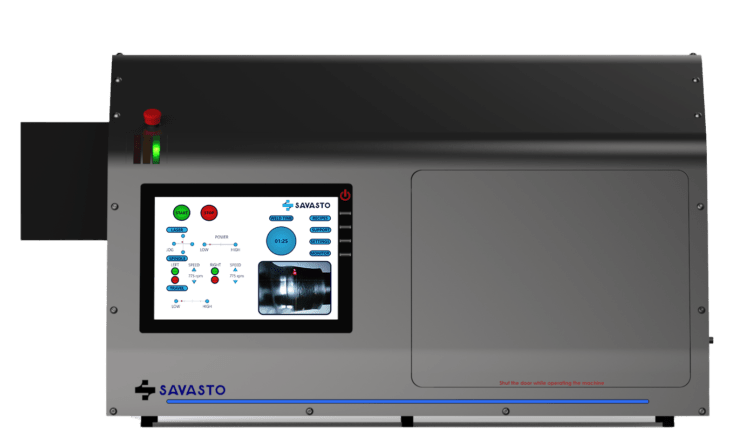
Front view / Catheter Laser Bonder
Catheter manufacturing / Laser bonding
Bring catheter bonding into a defined, recipe-led workflow. The SAVASTO laser bonding platform combines workpiece clamping, laser processing and an operator touchscreen in a benchtop machine.
| Process | Laser bonding |
|---|---|
| Platform | Benchtop |
| Workflow | Manual loading · controlled laser process |
Equipment configuration, process capability and acceptance requirements are defined through application review.
Request a demonstrationPLATFORM OVERVIEW
Set up and recall process programs through the operator touchscreen.
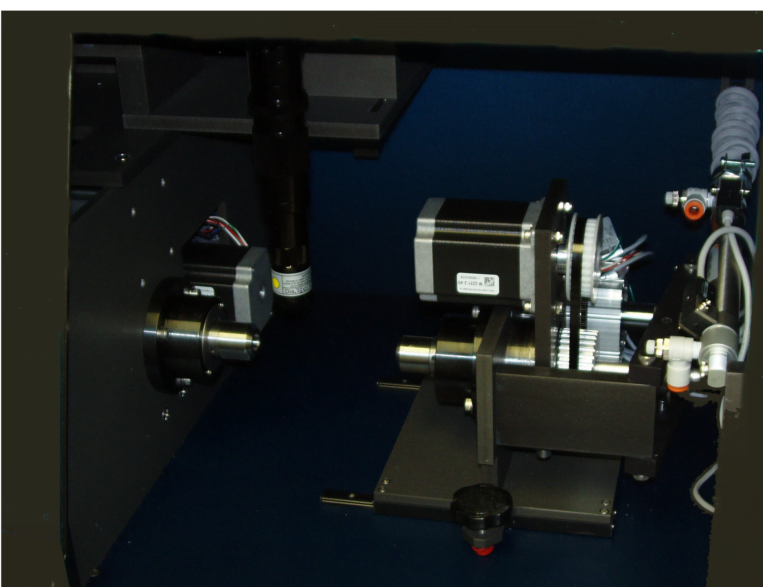
Clamping and application-specific collets locate the catheter for processing.
A viewing interface supports setup and observation of the processing area.
Define the tooling, material combination and bond requirements before specifying the machine.
TECHNICAL OVERVIEW
A benchtop platform that brings clamping, laser processing and operator control into one machine. Review the joint and material combination before defining the process window.
| System area | Platform approach | Define for your application |
|---|---|---|
| Process technology | Laser bonding and welding | Define the material combination, joint geometry and processing method. |
| Workpiece presentation | Catheter clamping with application-specific inserts | Confirm component dimensions, loading access and location features. |
| Operator control | Touchscreen setup and stored process programs | Agree recipe parameters, operator access and the required process records. |
| Process observation | Viewing interface for setup and observation | Define the inspection method separately from process observation. |
| Platform format | Benchtop machine | Confirm installation dimensions, service access and utilities for the proposed configuration. |
PROCESS WORKFLOW
Use this workflow to frame the equipment discussion. The final sequence and checks are defined for the agreed configuration.
Present the catheter assembly in the application tooling. Confirm orientation and the location of the joint.
Choose the agreed recipe and review the workpiece setup before processing.
Carry out the defined laser-processing sequence within the specified application window.
Remove the assembly and evaluate the bond using the agreed acceptance method.
APPLICATION EVIDENCE & HANDOVER
Define the evidence, sample set and responsibilities before equipment acceptance.
Agree representative materials, component tolerances and the sample set for the joint.
Define visual, dimensional, leak, pull or other mechanical tests where relevant to the application.
Review variation across samples, fixtures, operators and the proposed operating conditions.
Agree tooling identification, recipe/configuration records, operating guidance and acceptance documentation.
PREPARE THE APPLICATION
Use the worksheet to collect the component, process and acceptance information for your team.
Download application checklistPlain-text planning worksheet. It contains questions to prepare, not a released machine specification.
No universal material or geometry envelope is assumed. Review each material pair, component size and joint arrangement, then confirm the tooling and process capability for the proposed application.
Process observation supports setup and operation. Any automated inspection, pass/fail decision or retained manufacturing record needs its own agreed requirements and verification.
The component, process requirements, tooling and acceptance method define the proposed configuration. Utility requirements, capacity, operating envelope and documentation are confirmed in the quotation and agreed technical scope.
Start with the equipment of interest, a nonconfidential description of the workpiece and process, the main constraints and the stage of your project. We can agree an appropriate exchange before you send controlled drawings or sensitive process information.
Agree the sample set, test conditions, acceptance method and open-item closure before delivery. Equipment acceptance and qualification of your manufacturing process have different scopes and responsibilities; define both with your team.
APPLICATIONS
Use the application review to establish the material pair, component geometry and bond requirements.
BEFORE WE SPECIFY
A useful brief gives the engineering team a clear starting point. Exact dimensions, utilities, throughput and documentation are confirmed for the proposed configuration.
Prepare an application briefRELATED RESOURCES
APPLICATION GUIDE
The materials, joint geometry and acceptance questions to settle before specifying a catheter laser bonder.
Read the guidePROCESS GUIDE
Bring coating chemistry, vertical movement and UV curing into the same application conversation.
Read the guideENGINEERING CHECKLIST
A practical starting point for documentation, acceptance and equipment qualification discussions.
Read the guideYOUR APPLICATION. OUR STARTING POINT.